Regional Breakdown
Where Should You Base Your Ride?
Europe features distinct cycling microclimates and landscapes. Understanding the terrain, road conditions, and trip pacing will help you pick the perfect base camp.
1. Girona & the Costa Brava — Catalonia, Spain
World Pro Base
Terrain & Scenery: A unique blend of rolling farmland, coastal cliffs, and medium-altitude mountain passes like Els Àngels and Rocacorba. Within 30 minutes of rolling out of Girona’s medieval historic center, riders can be climbing into quiet volcanic hills or riding along the Mediterranean shoreline.
Road Conditions & Cycling Culture: Road surfaces are exceptionally smooth. Drivers in Catalonia are legally required to give cyclists at least 1.5 meters of clearance when passing. Girona is home to over 100 professional cyclists, specialty espresso cafes, and high-end bike rental stores.
Ideal Trip Length: 5 to 7 days. Suitable for all fitness levels due to the ability to choose completely flat valley loops or punishing steep ascents.
2. Mallorca — Balearic Islands, Spain
Spring Training Mecca
Terrain & Scenery: The island is divided into two distinct zones: the rugged Tramuntana mountain range in the northwest (home to Puig Major and Coll de Sóller) and the gently undulating central plain (known locally as Es Pla).
Climate Considerations: The prime riding season runs from late February through May, and again in October. Summer months (July–August) are hot and crowded with beach holidaymakers, making early spring the undisputed golden window.
Suitable Rider Type: Everyone from beginners booking their first group cycling holiday to racers putting in 800-kilometer pre-season training weeks.
3. French Alps (Savoie & Haute-Savoie) — France
Pure Mountain Climbing
Terrain & Scenery: Giant mountain passes connecting deep glacial valleys. Base towns such as Bourg-Saint-Maurice, Saint-Jean-de-Maurienne, and Annecy allow access to legendary ascents including the Col du Galibier, Col de la Madeleine, and Col de l'Iseran.
Road Conditions: Wide, well-paved alpine roads with numbered kilometer markers indicating current gradient and distance to summit. Traffic can increase during July when the Tour de France is in progress.
Ideal Trip Length: 6 to 9 days. Best suited for riders with strong endurance and confidence handling technical, fast descents.
4. Tuscany & the Chianti Hills — Italy
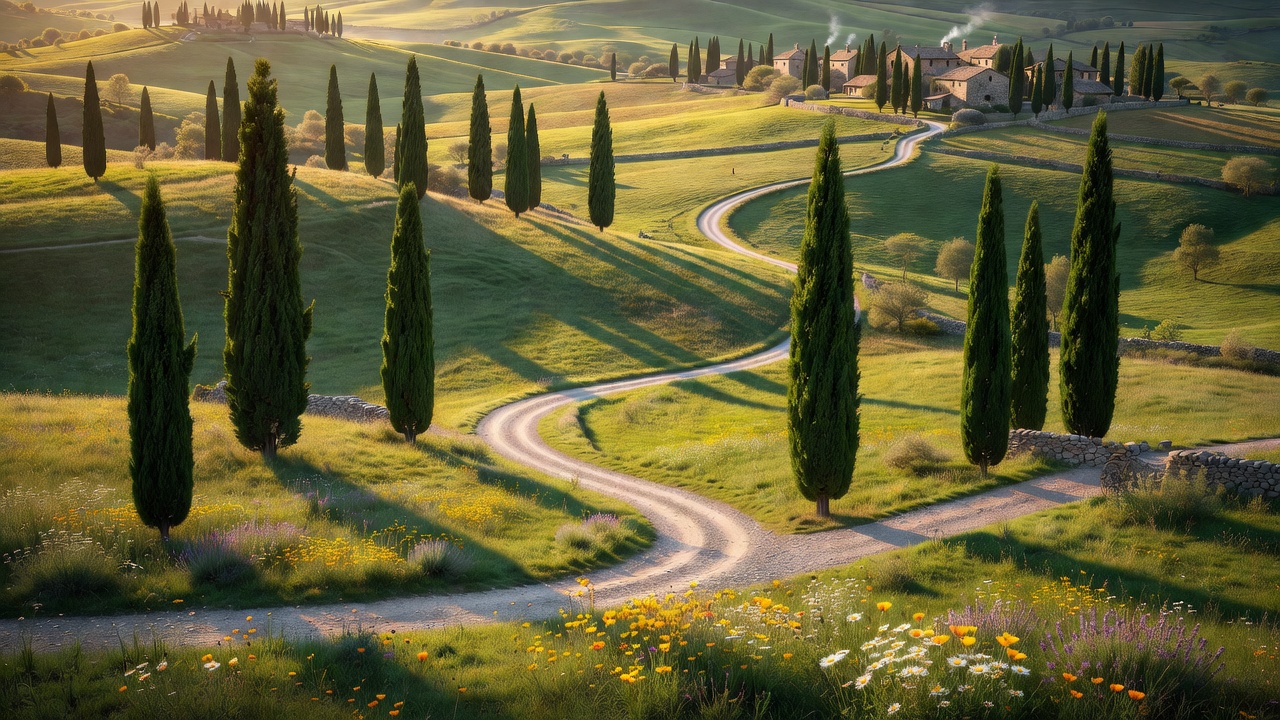
Gravel & Cypress Roads
Terrain & Scenery: Rolling hills covered with olive groves, vineyards, and medieval hilltop towns like San Gimignano and Siena. Tuscany is home to the famous strade bianche (unpaved white gravel roads) celebrated in vintage cycling events like L'Eroica.
Cycling Style: Gravel bikes and wide-tire endurance road bikes (28mm to 38mm tires) excel here. Paved roads are narrow and undulating, requiring frequent gear changes.
Ideal Trip Length: 4 to 7 days, combining cycling with world-class food and wine culture.
5. Flanders (Flemish Ardennes) — Belgium
Cobblestones & Short Bergs
Terrain: Flat agricultural plains punctuated by short, violently steep hills called bergs (such as the Koppenberg, Oude Kwaremont, and Paterberg), many paved with uneven historic cobblestones (pavé).
Cycling Atmosphere: Cycling is a national obsession in Flanders. The Centrum Ronde van Vlaanderen in Oudenaarde serves as the spiritual home for visiting riders.
Climate & Equipment: Weather is notoriously unpredictable; rain, crosswinds, and mud are common in spring. Run lower tire pressure (around 3.5 to 4.5 bar depending on body weight and tire width) to stay upright on wet cobbles.
◆
Quick Comparison
Comparing Major European Cycling Hubs
Use this summary table to match your preferred riding style and trip window with the right European destination.
| Region |
Primary Terrain |
Best Season |
Recommended Bike |
Average Daily Climbing |
| Girona (Spain) |
Rolling hills, coastal road, short climbs |
March – June, Sept – Nov |
Road / Gravel |
600 m – 1,200 m |
| Mallorca (Spain) |
Flat plains to rugged limestone peaks |
Feb – May, Oct |
Road Bike |
500 m – 1,800 m |
| French Alps |
Long high alpine mountain cols |
Mid-June – September |
Lightweight Climbing Road |
1,500 m – 3,000 m |
| Tuscany (Italy) |
Rolling hills & white gravel roads |
April – June, Sept – Oct |
Gravel / All-Road |
800 m – 1,500 m |
| Flanders (Belgium) |
Cobbled short bergs & windy flats |
March – May, Late Summer |
Endurance Road (wide tires) |
400 m – 900 m |
| Slovenian Alps |
Emerald river valleys & quiet passes |
May – September |
Road / Gravel / Touring |
900 m – 2,000 m |